
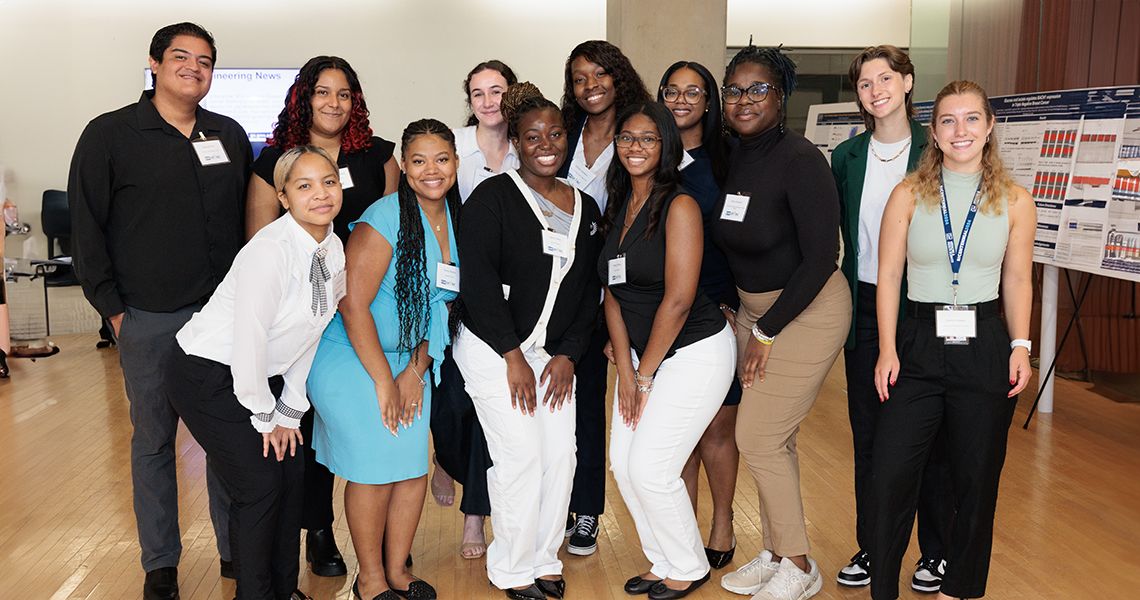
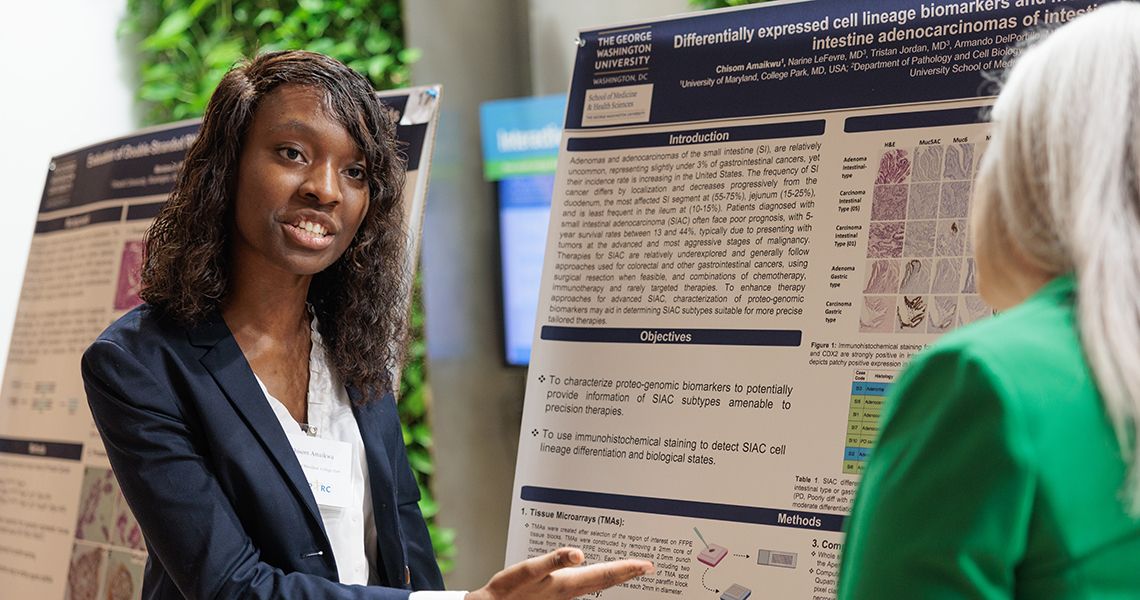
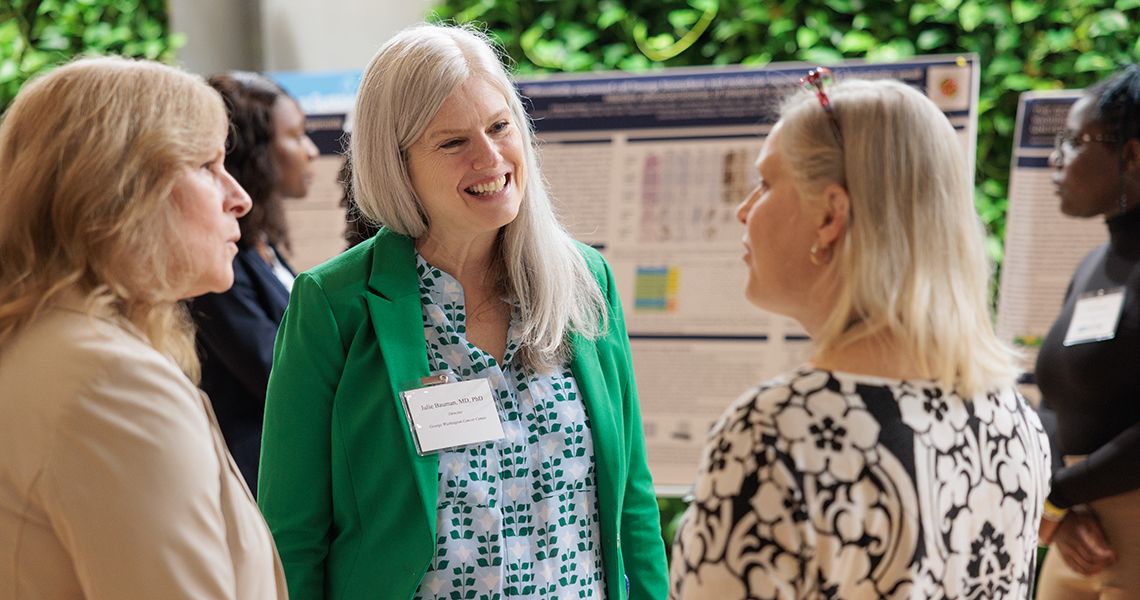
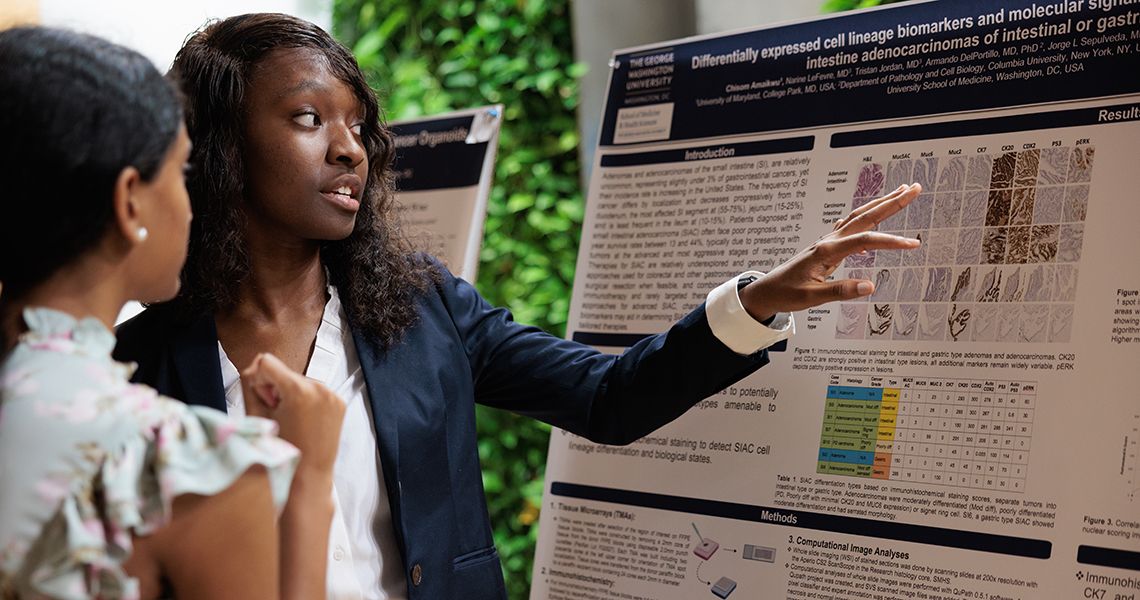
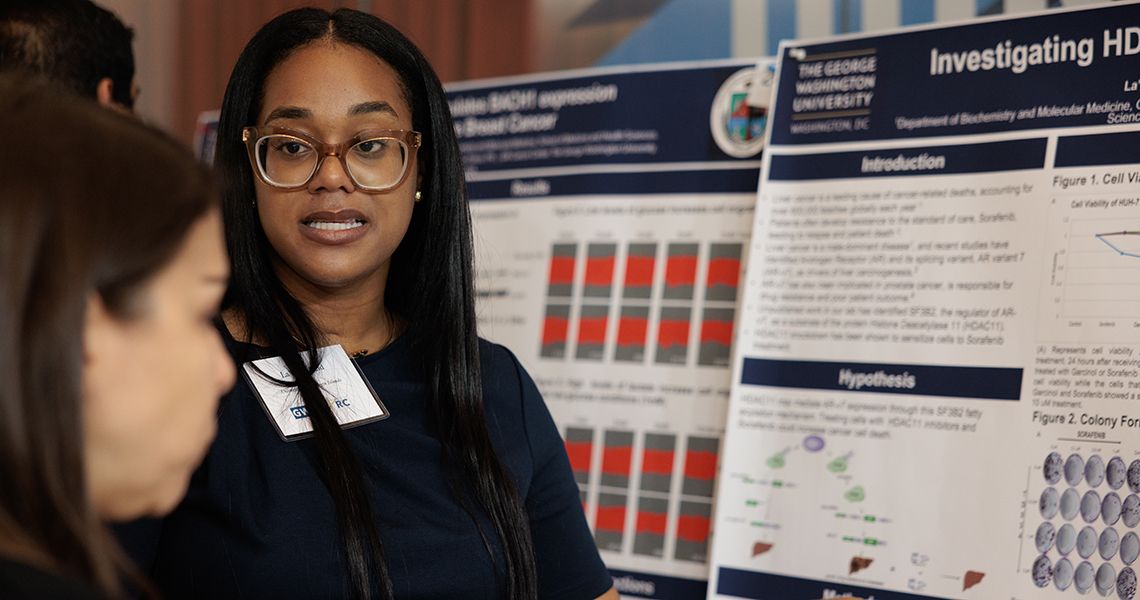
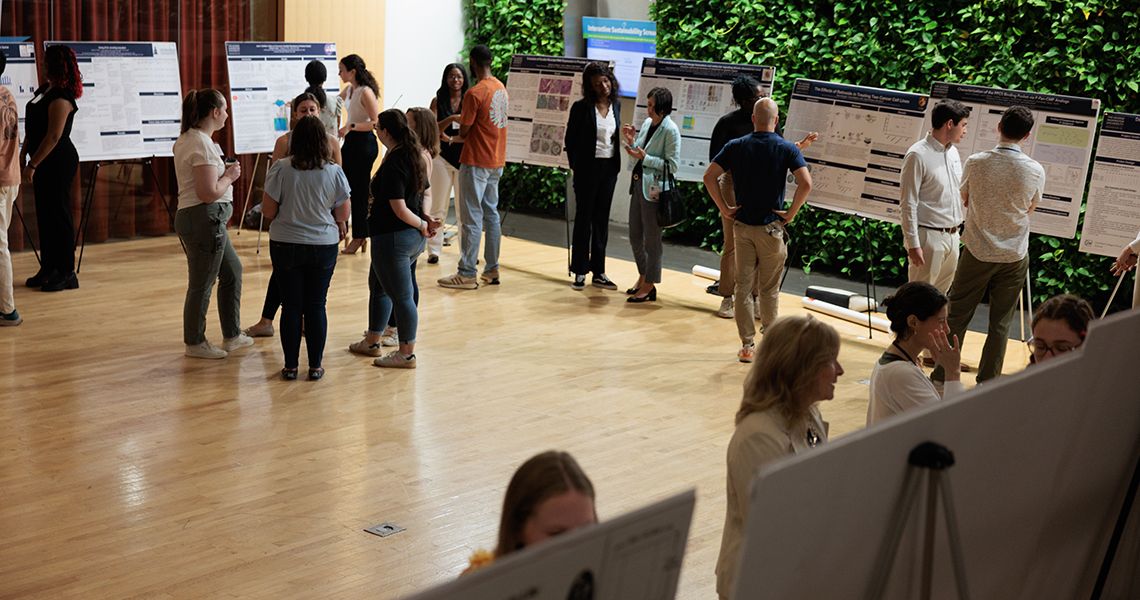
The George Washington University (GW) Summer Program Advancing Research on Cancer (GW-SPARC) concluded its annual research immersion experience with a vibrant poster session on Aug. 1. This event showcased the work of ten undergraduates from underrepresented backgrounds who spent ten weeks engaged in intensive cancer research.
The GW-SPARC program, a cornerstone initiative at the GW School of Medicine and Health Sciences (SMHS) since 2018, provides participants with a taste of what a PhD and career in research entail. The summer program immerses students in hands-on laboratory experiences, focusing on cutting-edge cancer research techniques and addressing health disparities related to cancer.
This year’s program featured a unique opportunity for students to interact with the Cancer Center Data Visualizer, an interactive tool that analyzes population-based data from the GW Cancer Center’s catchment area. This feature allowed participants to explore contemporary cancer research and its impact on various communities.
Julie Bauman, MD, MPH, Dr. Cyrus Katzen Family Director of the GW Cancer Center, emphasized the program’s role in shaping the future of cancer research. “The George Washington Cancer Center is deeply committed to addressing cancer health disparities in Washington, D.C.’s medically underserved communities. One evidence-based pathway is to develop a cancer research workforce that is more representative of the people disproportionately burdened by cancer and its aftermath,” she said.
The summer program includes hands-on research in areas such as cancer immunology, targeted therapies, and cancer engineering. Students also participated in weekly workshops covering topics from experimental design to applying to graduate and medical schools.
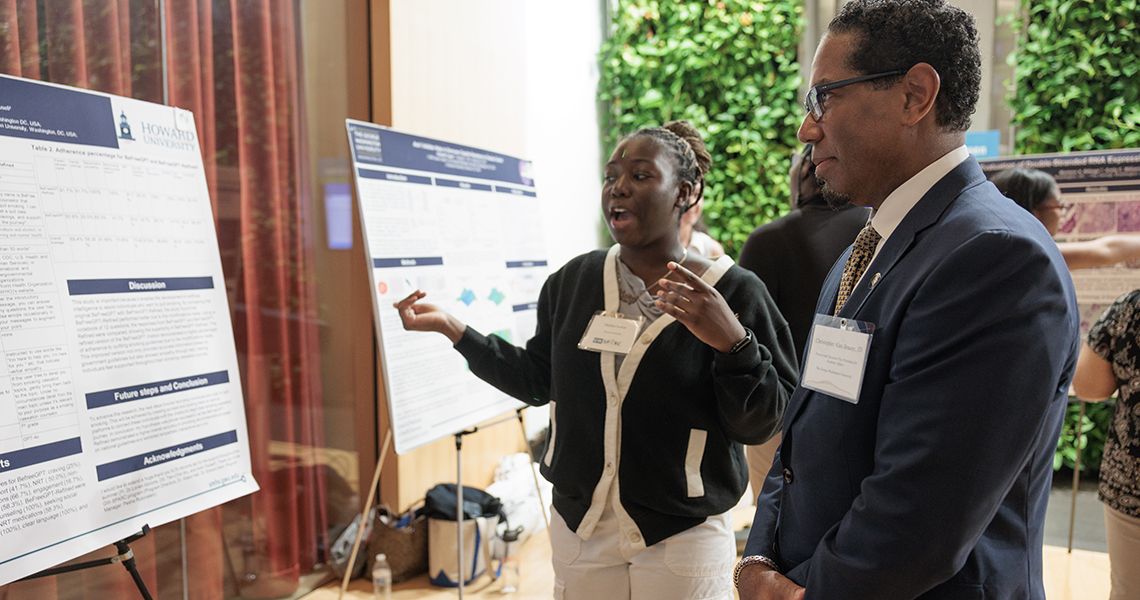
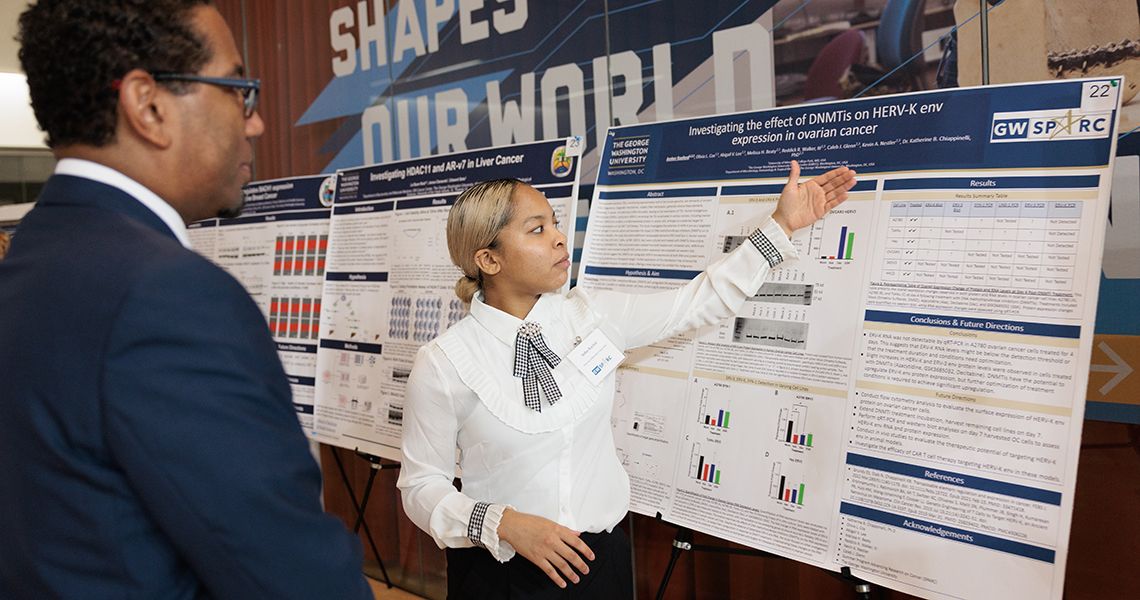
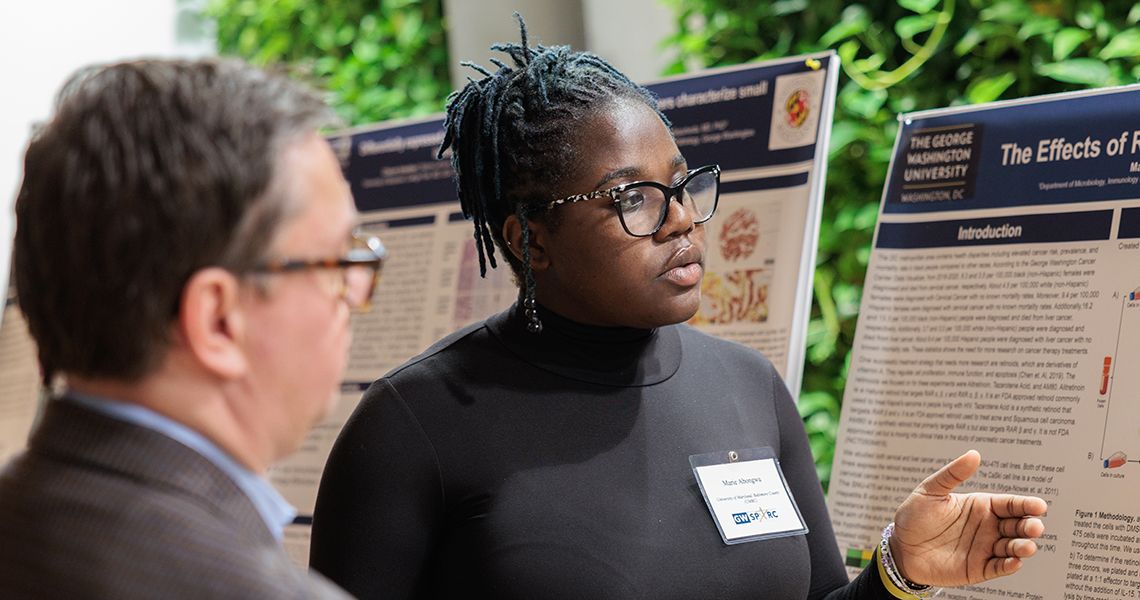
The poster session was attended by GW faculty, regional science leaders, and fellow students, providing a platform for the undergraduates to present their research findings.
Among the participants was Chisom Amaikwu from the University of Maryland, College Park, who worked in lab of Department of Pathology Chair Antonia Sepulveda, MD, under the supervision of Elena Komissarova, PhD.
“I was looking for research experiences close by in my community, around the DMV area, and was interested in a cancer research experience, particularly dealing with minority populations and health disparities,” explained Amaikwu, who had an opportunity to develop her interest in research and microbiology.
Amaikwu spent much of her time looking for chemical markers to detect diseases that are indications for cancer, and had the opportunity to try out the actual techniques that we use in the real lab setting.


