
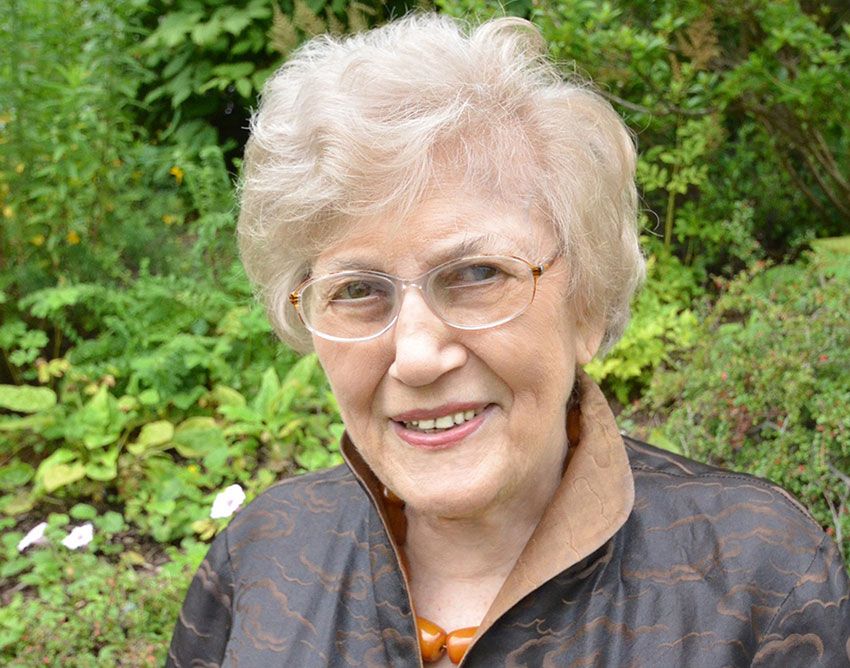
Liliane Willens had lived a life unmoored before; as a child, she and her family experienced World War II as stateless citizens in Shanghai. Decades later, after immigrating to the United States and earning her PhD, Willens found herself lost again – this time cast adrift by a disease.
In 1980, she was diagnosed with breast cancer, but a crew of capable physicians at the George Washington University (GW) Hospital were able to start a care regimen to manage her diagnosis, and she had a lumpectomy in 1989. Twenty-five years later, however, the cancer returned, and she returned to GW.
“The doctors are interested in me as a person, not as a condition,” she explains. “I feel very lucky to have such caring doctors.”
Her physician, Letitia Carlson, MD, MPH ’92, associate clinical professor at the GW School of Medicine and Health Sciences (SMHS), caught the cancer during Willens’ annual mammogram and sent her to Anita McSwain, MD, assistant professor of surgery at SMHS and associate director of the Breast Care Center.
“I didn’t think of [the cancer] coming back, but it can happen at any time, even 25 years later,” Willens said, adding that she underwent a mastectomy. “[But] I felt I was in good hands and very supported by Dr. McSwain, which is so important when you’re so scared.”
Now 90 years old, she credits her doctors – including Imad Tabbara, MD, professor of medicine at SMHS, and David Belyea, MD, professor of ophthalmology at SMHS – with keeping her going.
“They treat me like so much more than a condition or procedure. They care for me, the person. I feel like they want me around,” she said.


