
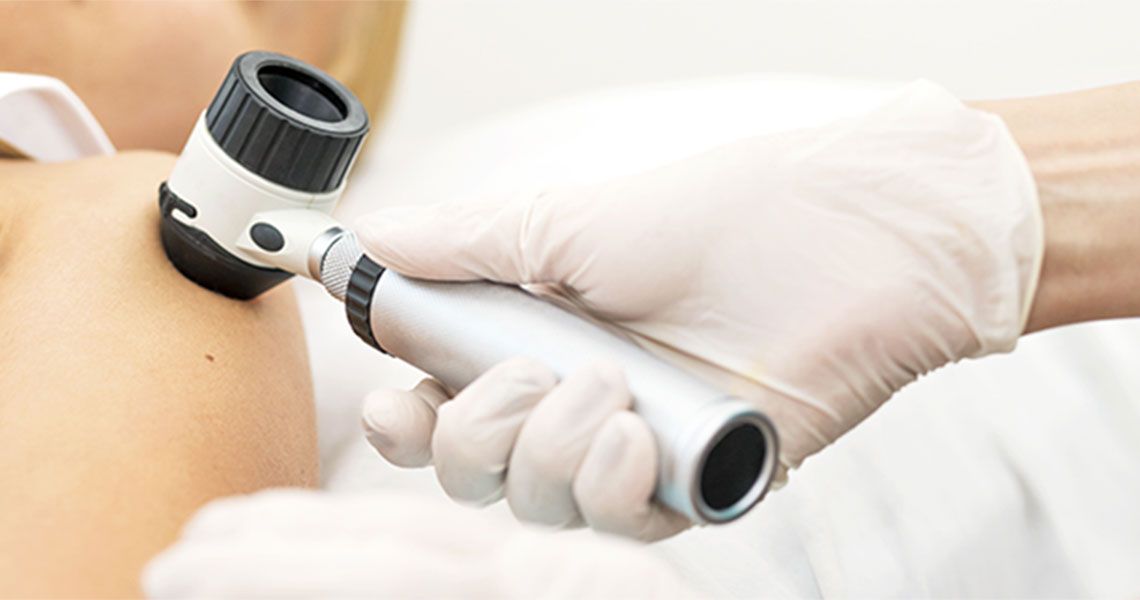
The George Washington University School of Medicine and Health Sciences (SMHS) Department of Dermatology hosted a free skin cancer screening on Thursday, May 4, during Skin Cancer Awareness Month. Over the course of the event, volunteers saw 145 people, many of whom had lined up early to secure a spot.
“Right as we started it was standing room only,” said Elizabeth Hazuka, executive residency coordinator in the Department of Dermatology. “Some people arrived half an hour before the screening started.”
The screening included a full-body examination, explained Thomas Lee, M.D., second-year dermatology resident at SMHS, during which a dermatologist inspected the entire surface of the skin. “If we noted a spot that was suspicious and needed further care, we made note of it on our screening form and counseled the patient on the recommended next steps,” he said
Skin cancer screenings serve two important purposes, according to Adam Friedman, M.D., associate professor of dermatology at SMHS. First, they enable ongoing surveillance of a suspicious mole from early on to identify and treat it as soon as possible. Second, screenings allow dermatologists to identify questionable lesions in places that are not easily visible. “As dermatologists, we’ve got your back … literally,” Friedman said.
He added that, when detected early and treated, before it spreads to the lymph nodes, melanoma has a 98 percent five-year survival rate.
“In the case of melanoma, it can mean the difference between only having to perform minor skin surgery versus the need for chemotherapy and targeted cancer medicines, which can come with a slew of side effects,” Lee said.
Risk factors for skin cancer, specifically melanoma, include a history of other cancers, previous diagnosis of melanoma, and having red or blond hair and blue or green eyes.
There are a multitude of steps that people can take to prevent skin cancer, including cutting back on exposure to ultraviolet radiation from the sun and indoor tanning beds, applying a broad-spectrum sunscreen with a SPF 30 or higher, wearing protective clothing, and sticking to the shade as much as possible.
Visit the SMHS Department of Dermatology for more information.


