Substance use disorder (SUD) is a prevalent and often undertreated condition that extends from individuals to families and communities. Recurrent drug and alcohol use lead to significant impairments and health issues for millions of Americans, according to the Substance Abuse and Mental Health Services Administration (SAMHSA), and the effects of SUD can appear in tandem with mental illness.
To fill a growing need for health care professionals who can effectively screen, diagnose, and treat individuals with SUD, an interprofessional team from the George Washington University (GW) School of Medicine and Health Sciences (SMHS), the School of Nursing, and the Milken Institute School of Public Health, with a two-year, $200,000 award from SAMHSA, have created Project RESULT: Rethinking Substance Use Disorder Practitioner Learning and Teaching.
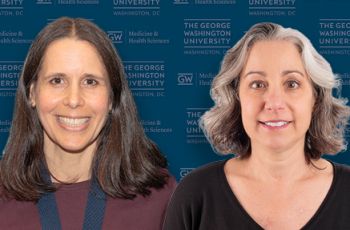
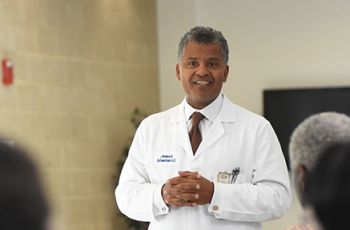
“We designed Project RESULT for a broad array of health professionals, including physicians, PAs, nurses, pharmacists, physical therapists, and public health professionals, as well as health professional trainees,” said Reamer Bushardt, PharmD, PA-C, DFAAPA, professor and senior associate dean for health sciences at SMHS. “Every clinician should be prepared and feel confident screening individuals at risk for SUD. While SUD is a public health crisis, it is treatable, and that is why we want to expand the number of health care professionals prepared to use evidence-based practices to screen, diagnose, refer, or treat individuals with SUD.”
Project RESULT launched recently with its first modules: addiction as a brain disease; harm reduction; SBIRT, or screening, brief intervention/treatment, and referral to treatment; and medical management of SUD. GW students may complete the training through a Blackboard learning community, while faculty, staff, and other health care professionals can access the training and additional educational resources and tools through the GW-managed Continuing Education (CE) portal. Participants can also earn CE credits.
“At the end of their training, participants will be able to understand the neurobiology of addiction and the appropriate steps to take, and they’ll have the skills to explain these processes to clients and families through empathetic, productive, and inclusive language,” said Karen McDonnell, PhD, associate professor of prevention and community health at the Milken Institute School of Public Health. “With these kinds of resources, we will be able to better support and partner with our clients and patients diagnosed with SUD and mental health issues.”
Register for the free training and meet the rest of the team